
Precision Machining of Copper and Aluminum Conductive Components: Botai's Process Planning and Manufacturing Priorities
For copper and aluminum conductive components used in medium- and high-voltage electrical equipment, precision machining involves much more than simply bringing a blank to the dimensions specified on a drawing.
From vacuum circuit breaker contact arms and switchgear conductive connections to complex components used in RMUs and GIS equipment, each product presents different manufacturing considerations.
AtYuhuan Botai Electric, we believe that effective machining process planning should begin at the blank design stage.
Beyond dimensional requirements, we consider workholding, machining sequences, datum selection, material characteristics, deformation risks and the feasibility of repeatable series production.
Our objective is not simply to machine a component, but to develop a manufacturing process that can consistently produce parts suitable for subsequent operations and final equipment assembly.
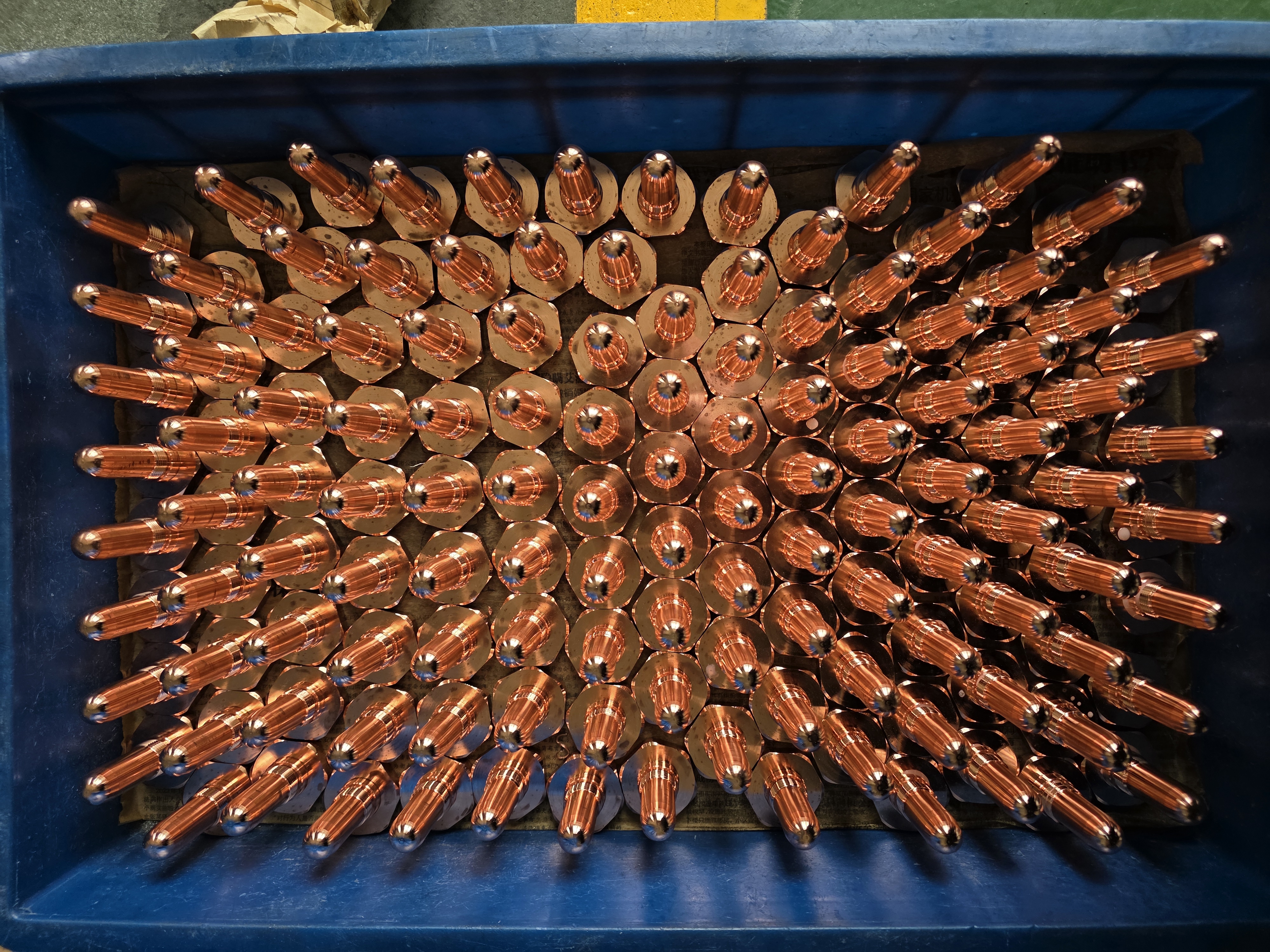
1. Reducing Unnecessary Setups Without Compromising Quality
For complex conductive components involving multiple faces, slots, internal bores and mounting holes, workholding strategy is one of our primary considerations during process planning.
Where machine capabilities, tool accessibility and component geometry allow, we evaluate how more machining operations can be completed within a single setup.
For certain components, a carefully planned setup can allow us to machine:
- 1.Multiple surfaces
- 2.Slots and grooves
- 3.Internal bores
- 4.Multiple mounting holes
- 5.Selected external features and chamfers
In one of our complex aluminum conductor applications, we can complete the machining of three surfaces, an internal bore and18 holes using just two setups.
Reducing unnecessary setups can help limit errors associated with repeated clamping, repositioning and realignment, while also reducing non-cutting time.
However, fewer setups are not always better. Some component geometries or machining conditions require separate operations to maintain stability, accessibility or accuracy.
Our priority is to complete more machining operations through a well-planned workholding strategy while maintaining manufacturing quality.
2. Precision Machining Begins with Blank Design
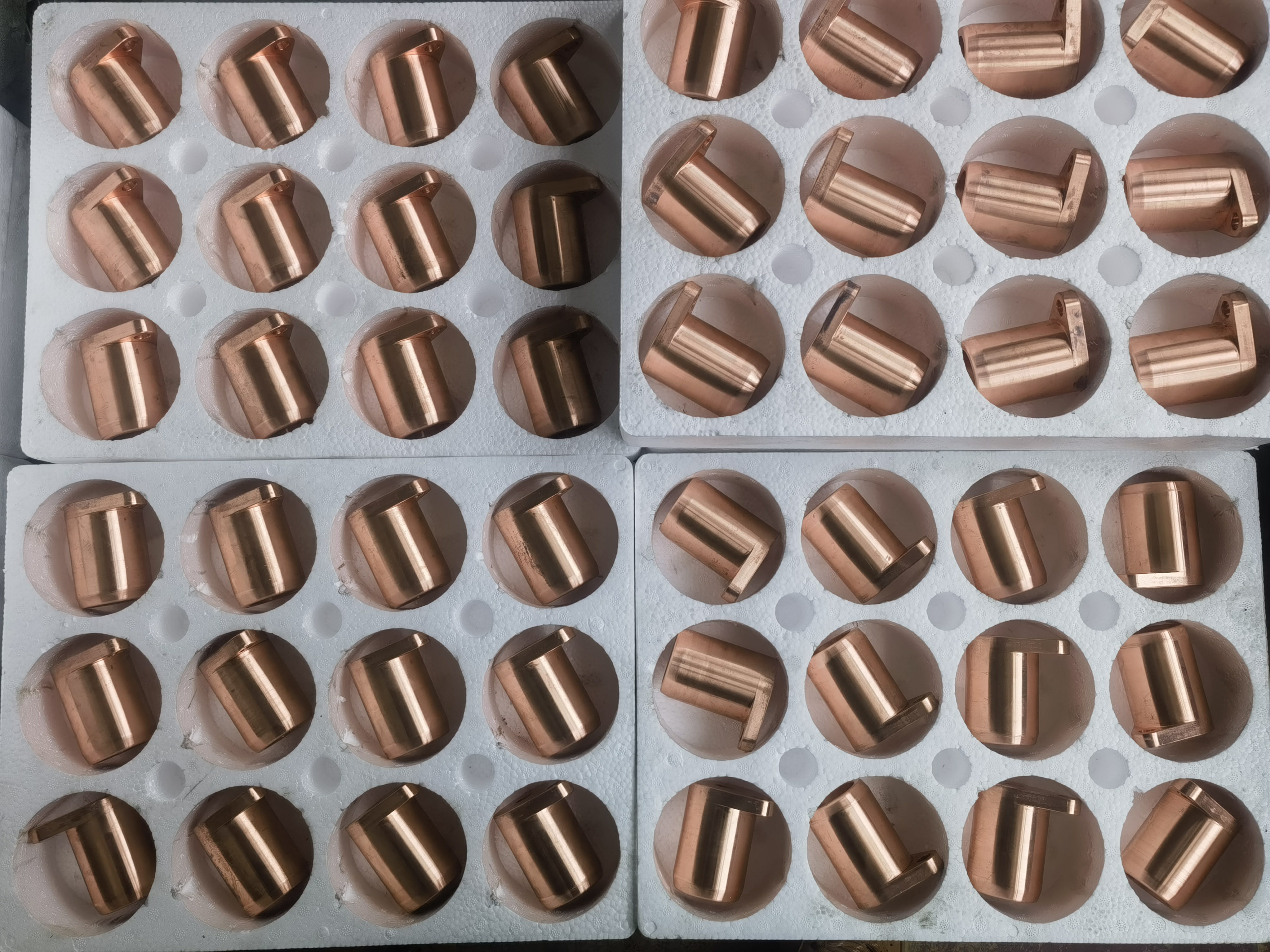
For some complex copper and aluminum conductive components, machining directly from solid bar stock, plates or standard profiles can involve substantial material removal.
This may increase both material consumption and machining time.
Before finalizing a machining process, Botai evaluates whether forging, cold extrusion, warm extrusion or other suitable forming methods could provide a more appropriate starting blank.
For components suitable for forming, our aim is to develop a blank geometry that is closer to the finished component.
This approach is commonly known asnear-net-shape manufacturing.
A properly designed near-net-shape blank may help:
- 1.Reduce unnecessary material removal
- 2.Minimize machining on selected external surfaces
- 3.Shorten CNC machining time
- 4.Reduce material waste
- 5.Provide a more suitable geometry for subsequent positioning and clamping
Near-net-shape manufacturing is not the best solution for every component.
Tooling investment, material characteristics, dimensional consistency and expected production volume must also be considered.
For relatively simple components or low-volume projects, direct machining may remain the more practical option.
For complex conductive components, machining efficiency often begins with the design of the blank, long before the part reaches a CNC machine.
3. Maintaining Consistent Machining Datums
Another important consideration in reducing unnecessary setups is maintaining dimensional relationships between machined features.
When mounting holes, internal bores, slots and multiple surfaces have critical positional requirements, repeated setups introduce additional opportunities for positioning errors.
During process planning, we therefore consider:
- 1.Machining datums for critical dimensions
- 2.Positional relationships between holes and surfaces
- 3.Repositioning methods between operations
- 4.Stability of fixture locating surfaces
- 5.Inspection methods for critical features
Where practical, we machine closely related features within the same setup.
When multiple setups are necessary, appropriate locating datums and fixture designs become essential for controlling dimensional consistency between operations.
The objective is not simply to reduce the number of machining operations, but to maintain clear and reliable datum relationships throughout the manufacturing process.
4. Controlling Deformation in Long Copper and Aluminum Components
Some contact arms, conductive rods and electrical conductors used in medium- and high-voltage equipment approach500 mm in length or more.
For these components, deformation control becomes particularly important during machining.
The mechanical properties of copper, aluminum and their alloys vary with material grade and condition.
For long or relatively flexible components, clamping forces, cutting forces, residual stresses and part geometry may all affect machining accuracy.
We therefore evaluate:
- Clamping positions and workpiece support
- Distribution and magnitude of clamping forces
- Cutting sequence and machining parameters
- Roughing and finishing operations
- Machining allowances
- Dimensional and geometric changes during processing
For long conductive components, securing the workpiece is only one part of the challenge.
The workholding arrangement must also avoid introducing unnecessary deformation.
A workpiece that is securely clamped is not necessarily correctly clamped.
5. Planning Appropriate Machining Allowances
Machining allowance is an important link between blank manufacturing and precision machining.
Excessive allowance may lead to increased material consumption, longer cutting times, greater tool wear and, in some applications, higher deformation risks.
Insufficient allowance can create a different problem: variations in forged or extruded blanks may not be fully removed during finishing operations.
For this reason, we do not simply apply the same allowance to every surface.
Instead, we consider:
- Actual dimensional variation after forming
- Machining requirements for different features
- Workpiece positioning and clamping methods
- Finishing requirements for critical surfaces
- Results from tooling trials and prototype machining
As production data becomes available, the blank design and machining allowances can be reviewed and adjusted where justified.
Appropriate machining allowance should reflect both actual blank manufacturing capability and final machining requirements.
6. Connecting In-House Mold Development with Machining Feedback
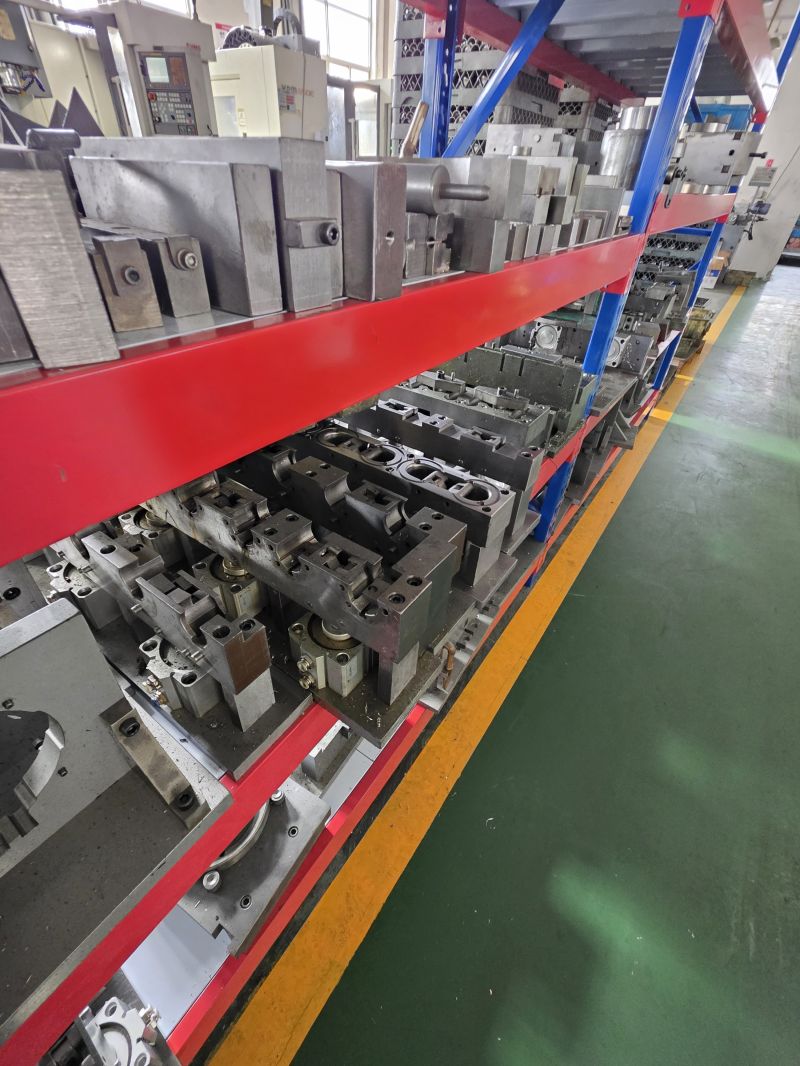
Botai's in-house mold development and manufacturing capabilities allow closer communication between tooling development and downstream machining operations.
For complex conductive components, mold development does not necessarily end after the first successful tooling trial.
During prototype development, pilot production and series production, our manufacturing and inspection teams may identify opportunities for improvement.
Examples include:
- Excessive machining allowance on certain surfaces
- Blank geometries that make clamping difficult
- Areas requiring unnecessary material removal
- Dimensions that need closer attention during repeated production
- Machining operations that could be simplified through blank design adjustments
This feedback can be communicated directly to the tooling development process.
Following appropriate evaluation and verification, mold geometry, blank design or machining processes can be adjusted.
This creates a practical feedback loop between tooling, machining and inspection.
Prototype → Pilot Production → Production Feedback → Process Optimization → Series Production
Our aim is to develop manufacturing processes that are not only suitable for initial samples, but also practical for repeatable production.
7. Designing Machining Processes Around Final Applications
Copper and aluminum conductive components are used in a wide range of electrical equipment, including:
- Vacuum Circuit Breakers (VCBs)
- Medium-Voltage Switchgear
- Ring Main Units (RMUs)
- Gas-Insulated Switchgear (GIS)
- Railway Electrical Equipment
- Other Medium- and High-Voltage Electrical Systems
These components must not only satisfy drawing dimensions, but also meet the requirements of subsequent manufacturing operations and final assembly.
Depending on customer specifications, our machining process planning may need to account for:
- Mounting hole positions and assembly datums
- Electrical contact and connection surfaces
- Surface treatment requirements
- Areas associated with epoxy insulation or assembly
- Critical connecting surfaces and their dimensional requirements
- Installation arrangements within the final equipment
For example, certain contact surfaces may require subsequent silver plating, while other areas may have different assembly or surface treatment requirements.
Such requirements can influence machining sequences, surface preparation and final inspection planning.
The purpose of precision machining is not only to manufacture a dimensionally compliant component, but to produce a conductive part that is suitable for its subsequent manufacturing processes and intended application.
Our Approach to Precision Machining
At Botai, we believe:
Precision machining does not begin at the CNC machine. It begins with the design of the blank and the manufacturing process.
From blank geometry and machining datums to fixture design, cutting sequences and production feedback, every stage can influence the manufacturability of a conductive component.
Through appropriate blank design, carefully planned setups, consistent machining references and continuous feedback from manufacturing and inspection, we aim to turn customer drawings into conductive components suitable for practical equipment applications and repeatable series production.
These are the manufacturing priorities behind our approach to complex copper and aluminum conductive components.
Developing New Copper or Aluminum Conductive Components?
If your engineering team is developing new conductive components, or your purchasing department is looking for a manufacturing partner with tooling development and precision machining capabilities, we welcome the opportunity to discuss your project.
Share your component drawings, material specifications and expected production volumes with Botai.
Our team can review the feasibility of blank forming, mold development, machining processes and prototype manufacturing.
Upload Your Drawing / Request a Quotation
Yuhuan Botai Electric
Customized Copper & Aluminum Conductive Components
In-House Mold Development | Forging & Extrusion | CNC Machining | Series Production