
Why We Choose Forging Over Casting for Electrical Conductive Components
Our experience with copper and aluminum conductive components, internal porosity, CNC machining, and in-house mold development.
Introduction
In the manufacturing of electrical conductive components, selecting the right production process is just as important as selecting the right material.
AtYuhuan Botai Electric Co., Ltd., we manufacture customized copper and aluminum conductive components for medium- and high-voltage electrical equipment, including vacuum circuit breakers (VCBs), ring main units (RMUs), gas-insulated switchgear (GIS), and other power distribution equipment.
For many of our products, we preferforging, cold extrusion, and warm extrusionto conventional casting when producing component blanks.
This decision is not based on the belief that casting is an inferior manufacturing process.
In fact, casting offers several advantages that forging and extrusion cannot always provide.
Our choice is based on the requirements of the electrical components we manufacture, the production challenges we have encountered, and our ability to develop and manufacture forging and extrusion molds in-house.
1. Casting Has Advantages We Recognize
Casting is a manufacturing process in which molten metal is introduced into a mold and allowed to solidify into the required shape.
One of its greatest advantages is the ability to manufacture components with complex geometries.
Some complicated internal structures can be difficult to produce directly through forging or extrusion. Casting may produce these shapes more efficiently, reducing the need for extensive CNC machining.
Another important advantage is material utilization.
By producing near-net-shape blanks, casting can reduce the amount of metal that needs to be removed during subsequent machining operations.
For certain complex components, this can lead to lower material consumption and competitive production costs.
We recognize these advantages and believe casting remains an important manufacturing technology.
However, for many of the electrical conductive components manufactured at Botai, we must also consider material integrity, potential internal defects, and the risks these defects create during precision machining.
2. Internal Porosity: One of Our Main Concerns with Casting
One challenge associated with casting is the possibility of internal porosity.
During solidification, gas entrapment, gas evolution, or metal shrinkage may create cavities inside a casting.
These cavities are not necessarily visible on the original surface.
A casting blank may appear completely normal from the outside while containing internal pores that cannot be detected through visual inspection alone.
Although modern casting processes can reduce porosity through appropriate process control, consistently managing these defects may require additional measures and inspection methods.
For electrical conductive components, internal porosity can create several concerns.
Electrical Conductivity
Copper and aluminum are widely used in electrical equipment because of their conductive properties.
When pores exist inside a metallic component, the continuity of the conductive material is interrupted locally.
Depending on their size, distribution, and location, excessive porosity may reduce the effective electrical conductivity of the component.
Gas Tightness
Certain conductive components used in electrical equipment must meet specific sealing or gas-tightness requirements.
If pores are interconnected, they may form potential leakage paths.
For components with these requirements, internal material integrity is particularly important.
Hidden Defects During CNC Machining
This is one of the most important problems we have encountered in manufacturing.
An apparently acceptable cast blank may contain internal cavities that are only exposed when CNC machining removes the surrounding material.
As a result, defects may remain unnoticed until the component has already undergone several machining operations.
3. Why Porosity Can Lead to High Scrap Rates During Machining
Many conductive components produced at Botai require precision CNC turning, milling, drilling, and other machining operations.
These operations create the final dimensions, electrical contact surfaces, and assembly interfaces specified in customer drawings.
Consider a typical production situation.
A cast blank enters the CNC machining process with no visible surface defects.
The component undergoes several turning and milling operations.
After much of the machining work has been completed, the final cutting operation reveals small pores or cavities beneath the original surface.
At this point, the component may already be close to its finished dimensions.
However, if these defects violate the required surface, contact, sealing, or structural specifications, the component cannot be accepted.
If the defects cannot be repaired in accordance with the applicable requirements, the component must be scrapped.
This results in more than just a loss of raw material.
The manufacturer has already invested in:
- Raw material and blank production
- CNC machining time
- Cutting tools and machine capacity
- Labor and production management
- Inspection and handling
- Replacement production when necessary
If similar defects occur repeatedly within a production batch, the resulting scrap can also affect production schedules and delivery reliability.
Based on our manufacturing experience, these risks are an important reason why we prefer alternative blank production methods for suitable conductive components.
A process that saves material at the beginning does not necessarily deliver the lowest cost per acceptable finished component.
4. Why We Prefer Forging, Cold Extrusion, and Warm Extrusion
Unlike casting, forging and extrusion shape solid metal through plastic deformation under pressure.
Because these processes do not involve melting and resolidifying the metal during component forming, they avoid introducing new solidification-related porosity at that stage.
With appropriate raw materials, mold design, and process control, these methods are well suited to many of the conductive components we produce.
Cold Extrusion
Cold extrusion forms metal under high pressure, generally at or near room temperature.
For suitable copper conductive components, this process allows us to produce blanks with controlled dimensions and efficient material utilization.
Depending on the material and deformation conditions, cold extrusion can also increase material hardness and strength through work hardening.
Warm Extrusion
Warm extrusion involves heating solid metal to a controlled temperature below its melting point before forming.
Compared with cold extrusion, this can reduce forming resistance and make certain geometries easier to manufacture.
For components that require excessive forming pressure at room temperature, warm extrusion provides another manufacturing option.
Forging
Forging uses compressive force to deform solid metal into the required shape.
For suitable copper and aluminum conductive components, forging allows us to produce blanks with controlled geometry while avoiding the solidification defects associated with directly casting the final component shape.
Proper mold design and forming parameters can also help control material flow and mechanical properties.
However, forging and extrusion are not completely free from defects.
Improper forming conditions, unsuitable mold designs, or defects in the starting material may still lead to cracks, folds, or other manufacturing problems.
Therefore, raw material inspection, process control, and finished-component inspection remain essential.
Our preference for these processes is based on their suitability for our products, rather than any assumption that forging and extrusion are universally superior to casting.
5. Lower Material Waste Does Not Always Mean Lower Manufacturing Cost
Casting can offer excellent material efficiency, especially for complex components.
However, material utilization alone does not determine the final manufacturing cost.
We evaluate manufacturing costs across the complete production process:
Blank Production → CNC Machining → Surface Treatment → Inspection → Finished Component
An initially inexpensive blank may become costly if hidden defects cause rejection after several machining operations.
Conversely, a forged or extruded blank may require additional material removal but still provide a more predictable manufacturing process.
When comparing production methods, we consider several factors:
- 1. Raw material consumption
- 2. Blank production costs
- 3. Machining allowances and machining time
- 4. Mold investment and maintenance
- 5. Defect-related scrap and rework
- 6. Production consistency and delivery requirements
- For customized conductive components, our objective is not simply to minimize blank cost.
It is to achieve a competitive and manageable total manufacturing cost while meeting the customer's technical requirements.
6. In-House Mold Development Is Another Important Reason Behind Our Choice
Beyond material properties and machining risks, our mold development capabilities are an important factor in selecting manufacturing processes.
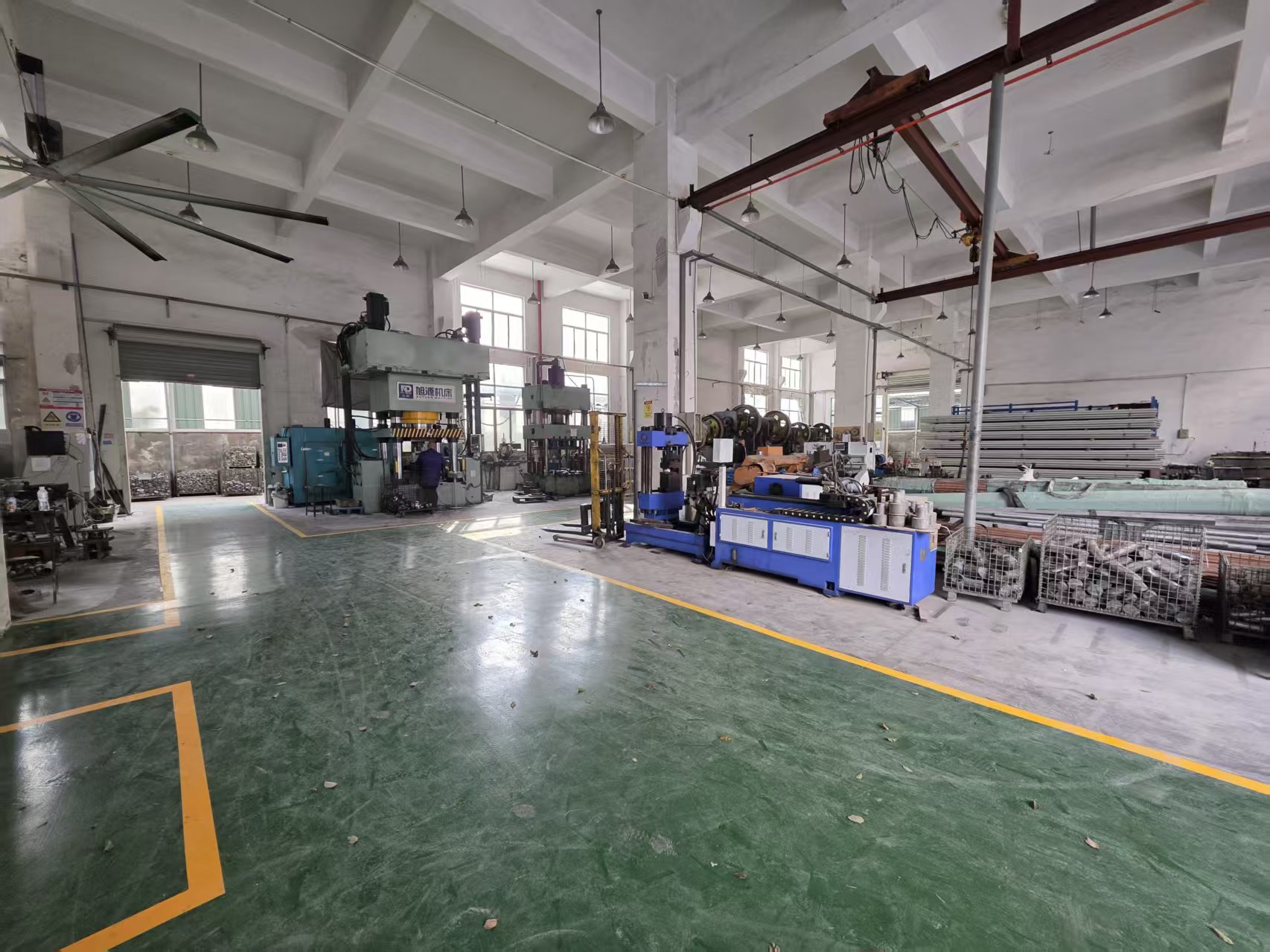
At Yuhuan Botai,we do not currently manufacture casting molds in-house. However, we have our own capabilities to develop and manufacture molds for forging, cold extrusion, and warm extrusion.
This difference directly influences our production strategy.
When a customer provides drawings for a new conductive component, we can evaluate the machining requirements and independently develop the corresponding metal forming molds.
This provides several practical advantages.
Better Control Over Blank Dimensions
By designing our own molds, we can adjust blank geometry according to the finished component's dimensions, machining allowances, and material forming characteristics.
Our goal is to provide sufficient material for CNC machining while reducing unnecessary material removal.
Direct involvement in mold development also allows us to make adjustments based on actual trial production results.
Greater Control Over Mold Maintenance and Production Consistency
During batch production, molds may experience wear, dimensional changes, or other problems that affect the forming process.
Because we develop and manufacture our own molds, we can inspect, maintain, repair, and adjust them internally.
This reduces our dependence on external mold suppliers and gives us more flexibility when responding to manufacturing problems.
It also helps us manage blank dimensional consistency and reduce potential production interruptions.
More Direct Control Over Manufacturing Costs
Mold design, blank dimensions, material utilization, mold service life, maintenance requirements, and machining allowances all influence the final cost of a component.
By keeping mold development and manufacturing in-house, we can coordinate these factors more directly.
This is particularly valuable for customized copper and aluminum conductive components requiring repeated production over a long period.
Of course, in-house mold manufacturing does not automatically mean forging or extrusion will be less expensive than casting for every product.
Production volume, part complexity, technical requirements, and other cost factors must still be evaluated.
We choose forging, cold extrusion, and warm extrusion not only because they suit our product requirements, but also because they match our own manufacturing capabilities.
This is an important part of our process selection.
7. From In-House Mold Development to Finished Conductive Components
Our metal forming processes are supported by our in-house mold development and manufacturing capabilities.
Depending on the component structure, material, and production requirements, we select suitable blank production methods and coordinate them with subsequent machining operations.
Our manufacturing capabilities include:
- 1.In-house mold development and manufacturing
- 2.Cold extrusion and warm extrusion
- 3.Copper and aluminum forging
- 4.CNC turning and milling
- 5.Silver, tin, and nickel plating
- 6.Component assembly and inspection
Our products include fixed contacts, tulip contact components, contact arms, conductive rods, GIS conductors, and other customized copper and aluminum components.
These products are used in medium- and high-voltage electrical equipment.
Rather than applying the same manufacturing process to every product, we evaluate the requirements of each component before selecting an appropriate production method.
8. Our Choice Is About Manufacturing Suitability, Not Rejecting Casting
Casting remains a valuable manufacturing process.
For components with complex geometries or specific near-net-shape production requirements, it may be the most appropriate solution.
Our decision to prioritize forging, cold extrusion, and warm extrusion is based on four factors:
- 1.Reducing the risk of internal solidification-related defects.
- 2.Reducing unexpected scrap during precision CNC machining.
- 3.Maintaining direct control over blank dimensions and mold maintenance.
- 4.Managing overall manufacturing costs through our in-house production capabilities.
For Yuhuan Botai, these processes provide a manufacturing approach that aligns with our product requirements, practical experience, and existing facilities.
We do not choose forging because casting has no value. We choose forging and extrusion because they are better suited to the conductive components we manufacture and the capabilities we have developed.
We believe the right manufacturing process should be selected according to the requirements of the finished component, not simply the apparent convenience or initial cost of producing the blank.
AtYuhuan Botai Electric Co., Ltd., we combine in-house mold development, metal forming, CNC machining, and surface treatment to manufacture customized copper and aluminum conductive components for electrical equipment.
If you are developing or sourcing conductive components for medium- or high-voltage applications, we welcome you to share your drawings with our team.
Explore our products, manufacturing processes, and drawing-based quotation services at: